
Investor Guide · 9 min read
How to Invest in African Real Estate
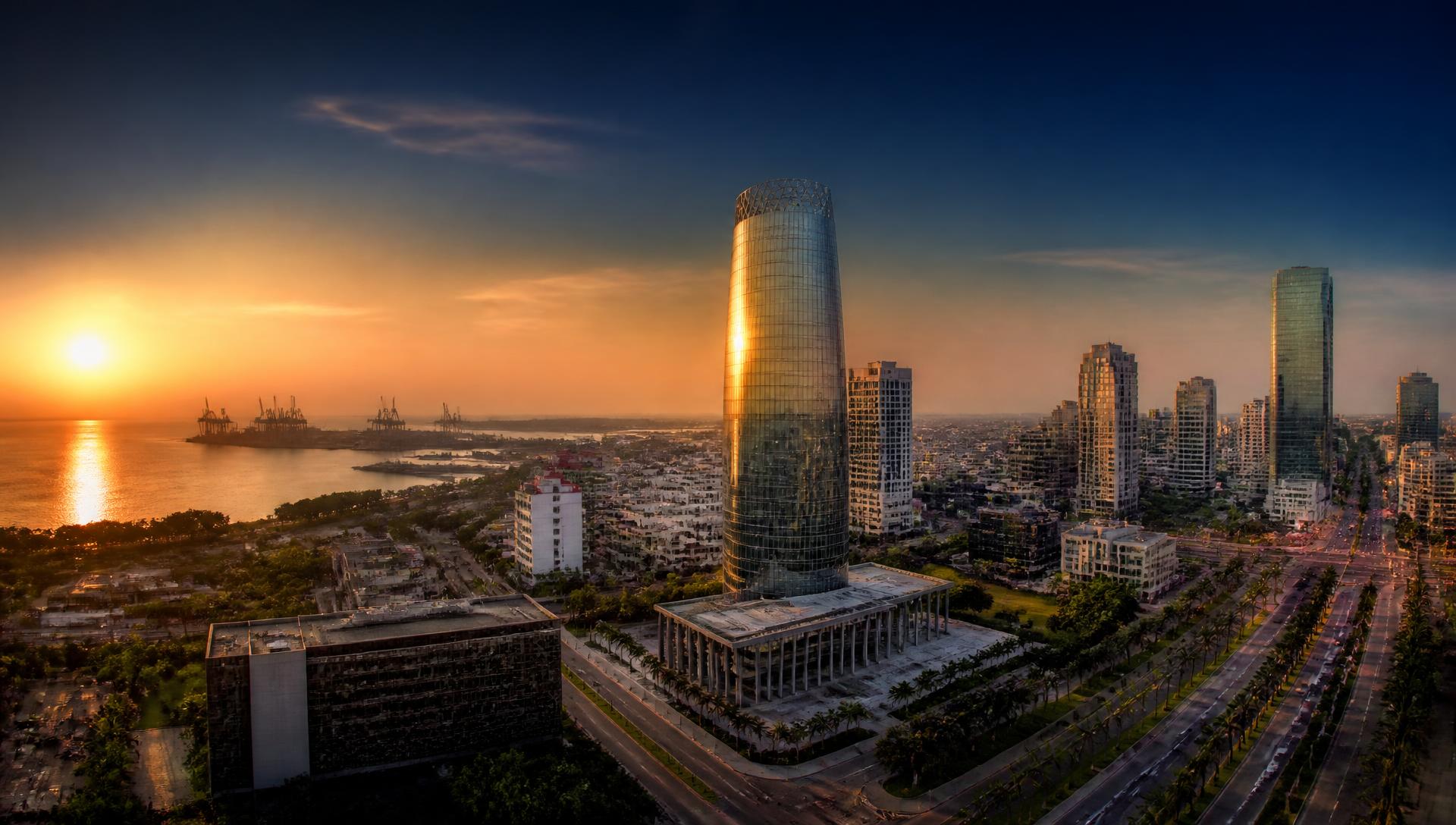
African real estate is no longer a frontier curiosity. Across Lagos, Accra, Abidjan, Lomé, Nairobi and Kigali, urban populations are expanding faster than the built environment can absorb them, and institutional-grade stock remains scarce in almost every asset class — hospitality, logistics, grade-A offices, and formal residential.
The opportunity is real, but so is the execution risk. Returns in African real estate are earned in the details: title, permitting, construction oversight, currency structuring, and the quality of the local partner. This guide sets out how disciplined investors approach the market.
1. Choose your entry route
There is no single way in. Each route carries a different risk, control and liquidity profile, and the right choice depends on the size of your allocation and your appetite for hands-on involvement.
- Direct acquisition — you buy a completed, income-producing asset. Lowest development risk, highest capital requirement, immediate yield.
- Development joint venture — you fund construction alongside a local sponsor who contributes land, permits and delivery capability. Highest returns, highest execution risk.
- Co-investment in a sponsored vehicle — you take a minority position in a single-asset SPV managed by an established developer. Institutional governance without full project responsibility.
- Private real estate funds and REITs — listed and unlisted vehicles in Nigeria, Ghana, Kenya and South Africa offer diversified exposure and far better liquidity, at lower absolute returns.
- Diaspora residential programmes — structured, smaller-ticket entry into serviced plots or apartment units, popular for first allocations.
2. Understand land tenure before anything else
Title is the single most common point of failure. Many African jurisdictions run parallel systems — statutory registered title alongside customary or family land — and a seller may hold a legitimate customary claim that still does not survive registration.
Before committing capital, insist on a registered search at the national or municipal land registry, a physical site verification, confirmation that the parcel is not within a government acquisition or road reservation, and written consent from every family or community claimant where customary land is involved. In leasehold jurisdictions, check the unexpired term and the renewal terms.
- Commission an independent lawyer — never rely on the seller's counsel.
- Verify survey plans against the registry's coordinates, not just the paper plan.
- Budget time: title verification in most West African markets takes four to twelve weeks.
3. Run institutional-grade due diligence
Treat an African acquisition the way you would treat one in any developed market, then add a layer for infrastructure and permitting. A complete file covers legal title, planning and building permits, environmental and social impact clearance, utility connection capacity, geotechnical soil reports, and an independent valuation.
For income-producing assets, stress-test the rent roll. Check whether leases are denominated in local currency or US dollars, whether escalation clauses are enforceable, and what the actual collection history looks like rather than the contracted rent.
4. Structure for currency and repatriation
Currency is the quiet determinant of dollar returns. A project can perform beautifully in local terms and still disappoint offshore. Wherever possible, match the currency of revenue to the currency of debt and equity: hospitality and logistics assets often earn hard-currency or dollar-indexed income, which is why they attract international capital first.
The West African CFA franc zone — which includes Togo, Côte d'Ivoire, Senegal and Benin — is pegged to the euro, which removes much of the devaluation volatility seen elsewhere on the continent. That peg is a material part of why capital is rotating toward the region.
Register your investment with the relevant central bank or investment promotion agency at the point of inflow. This registration is what entitles you to repatriate dividends and capital later; investors who skip it often discover the problem only at exit.
5. Select the partner, not just the asset
In markets where institutions are still maturing, the sponsor is the asset. The right partner controls land assembly, navigates permitting, manages contractors, and protects your position when circumstances change.
Assess partners on delivered track record rather than pipeline, on the transparency of their reporting, on whether they co-invest their own capital alongside yours, and on the governance of the vehicle you are entering — board rights, reserved matters, audit, and a defined exit mechanism.
6. Plan the exit at entry
Secondary markets are thinner than in Europe or North America, so exit routes should be defined before capital is deployed. Realistic options include sale to a regional institutional buyer or pension fund, sale-and-leaseback of an operating asset, refinancing to return equity while retaining ownership, or a structured buy-out by the sponsor at a pre-agreed formula.
Hold periods of five to ten years are normal. Investors underwriting three-year flips are usually underwriting the wrong market.
Market snapshot: where the numbers point
Figures below are drawn from published 2025 market research. They are indicative of direction and scale, not a substitute for asset-level underwriting.
| Market | Segment | Data point |
|---|---|---|
| Continent-wide housing | Residential | Estimated 51-million-unit housing deficit, projected to widen toward 130 million units by 2030 (Knight Frank, Africa Horizons 2025/26). |
| Urbanisation | All asset classes | Urban populations growing about 3.5% a year — the fastest globally — with roughly 60% of Africans expected to live in cities by 2050. |
| Hospitality pipeline | Hotels & resorts | 577 hotels and 104,444 rooms under development across Africa in 2025, up 13.3% year on year (W Hospitality Group). |
| Grade A offices | Commercial | ESG-certified prime offices command 30–40% rental premiums in Botswana, with CBD Grade A occupancy near 98% (Knight Frank, H2 2025). |
| Listed property | REITs | South African REITs delivered a 46.2% year-to-date total return to November 2025, outperforming US and Australian listed property. |
| Nairobi, Kenya | Offices & hospitality | Office occupancies rose about 5% in H1 2025 against GDP growth projected at 4.5%, with sustained hospitality confidence (Knight Frank Kenya). |
| Lomé, Togo | Logistics & trade | Lomé Container Terminal operates a 1,050m berth at 16.6m draft, serving Mali, Niger and Burkina Faso as a regional transshipment hub. |
Case studies: how capital has actually been deployed
Three transactions that illustrate the structures described above — a developer-led mixed-use scheme, a private-equity hotel acquisition, and a greenfield infrastructure concession.
Kenya · Mixed-use development
Two Rivers, Nairobi
Developed by listed Kenyan investment company Centum, Two Rivers is a 100-acre integrated mixed-use scheme anchored by what was, at opening, the largest mall in sub-Saharan Africa.
- Opened February 2017 with over 159 stores, 15 restaurants and 2,100 parking spaces.
- Valued at approximately USD 166 million, with a residential component of 196 luxury apartments worth about USD 43 million.
- Anchored by international tenants including Carrefour and LC Waikiki; later added the Holiday Inn Nairobi Two Rivers Mall.
What it demonstrates: A single serviced site can carry retail, office, residential and hotel income streams — diversifying tenant risk and justifying the cost of private power, water and connectivity infrastructure.
Kenya · Hospitality acquisition
Actis and the Radisson Blu Nairobi
Actis acquired the operating company of the 271-room Radisson Blu Nairobi through its Africa Real Estate Fund 3 in 2021, then repositioned hotel assets with global operators.
- Acquisition executed through a dedicated Africa real estate fund rather than direct balance-sheet ownership.
- Ownership including Actis and Westmont Hospitality subsequently rebranded properties in Kenya and Tanzania under IHG franchise agreements in 2022.
- Strategy combined an existing operating asset with brand conversion and renovation capital.
What it demonstrates: Buying an operating hotel and re-flagging it with an international brand is a lower-risk route into African hospitality than ground-up development, and it shortens the path to stabilised income.
Togo · Greenfield infrastructure
Lomé Container Terminal
A privately developed deep-water container terminal established in 2008 that turned Lomé into the principal transshipment hub on the West African coast.
- 1,050 metres of berth at 16.6 metres draft — deep enough for the largest vessels calling in the region.
- Serves the coastal trade plus landlocked Mali, Niger and Burkina Faso.
- Operated under a long-term private concession alongside state port authority infrastructure.
What it demonstrates: Infrastructure sets the ceiling on every other asset class. Hospitality, logistics and mixed-use assets positioned on a functioning trade corridor inherit its demand.
Sources
- Knight Frank — Africa Horizons 2025/26
- W Hospitality Group — Hotel Chain Development Pipelines in Africa 2025
- Knight Frank — Africa Offices Market Dashboard H2 2025
- Knight Frank — Kenya Market Update H1 2025
- ALN — Centum, Two Rivers Mall case study
- Global Private Capital Association — Actis to acquire Radisson Blu Nairobi
- Lomé Container Terminal
Prospera Global Holdings originates, structures and manages institutional-grade real estate and hospitality assets across West Africa, with development operations anchored in Togo. If you are evaluating an allocation, our team can walk you through live opportunities and the diligence behind them.
Partner With UsContinue reading