
Market Perspective · 8 min read
Why Invest in Africa Real Estate
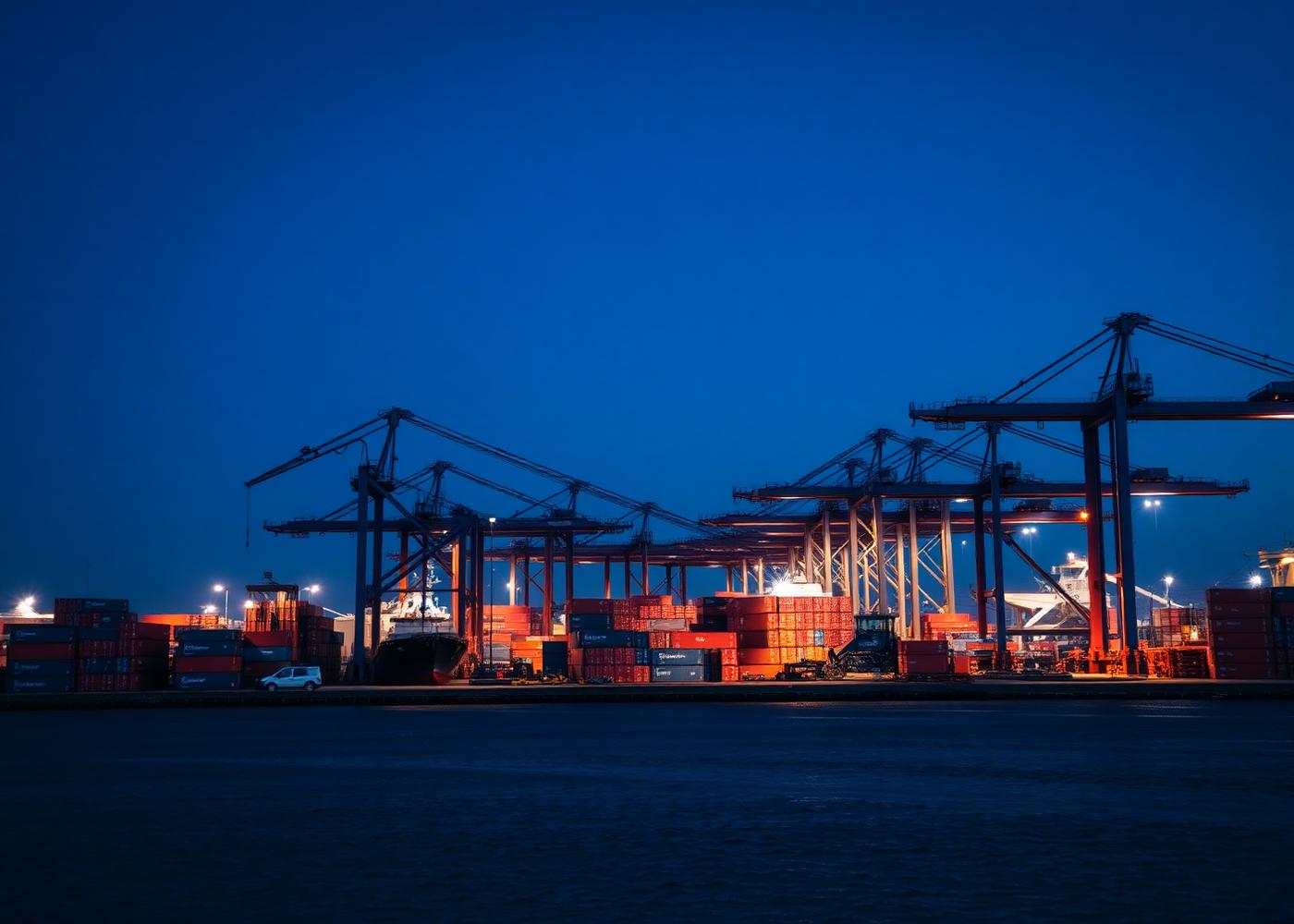
Global capital allocators are running out of places where yield, growth and scarcity coincide. Prime real estate in Europe and North America is priced for perfection and competing with risk-free rates. Africa is one of the few regions where the underlying demand driver — people needing space in cities — is still accelerating faster than supply.
This is not an argument built on sentiment. It rests on four structural facts.
1. Demographics that no other region can match
Africa is the youngest continent on earth, with a median age under twenty and a population on track to roughly double by 2050. That single trend generates decades of compounding demand for housing, schools, hotels, retail, offices, warehousing and transport infrastructure.
A growing middle class translates demographic weight into commercial demand: formal retail, branded hospitality, and quality residential stock that families are willing and able to pay for.
2. Urbanisation is outrunning construction
African cities are absorbing tens of millions of new residents each decade. Formal delivery of housing and commercial space has not kept pace anywhere on the continent, and the housing deficit is measured in the millions of units in single countries.
For an investor, a persistent supply gap is the most durable form of pricing power. Well-located, well-built stock leases quickly and holds occupancy through cycles, because there is very little competing product of comparable quality.
3. Yields and entry pricing remain compelling
Prime commercial and hospitality assets in leading African markets have historically traded at yields materially above equivalent assets in Western Europe or the United States. Replacement cost is lower, land is cheaper relative to achievable rent, and there are far fewer bidders for any given deal.
Hospitality is a particular standout. International brand penetration across most African cities is a fraction of global averages, business travel and intra-African tourism are growing, and quality room supply is thin — which is why global operators are signing pipeline aggressively across the region.
- Hospitality — structural undersupply of branded rooms, hard-currency-linked revenue.
- Logistics and industrial — driven by port modernisation, e-commerce and regional trade under AfCFTA.
- Mixed-use — the dominant format in cities where retail, office and residential demand cluster around a single serviced site.
4. Reform, integration and infrastructure
The African Continental Free Trade Area creates the largest single market by member count in the world, and it is steadily lowering the friction of moving goods and services across borders. That improves the economics of every warehouse, port and business hotel positioned on a trade corridor.
Investment promotion agencies, special economic zones and public-private partnership frameworks have matured considerably. Several markets now offer defined tax holidays, customs relief and clear repatriation rules for registered foreign investment.
Why West Africa, and why Togo
Within the continent, the West African CFA zone offers a rare combination: a currency pegged to the euro, a common regional regulatory framework, and deep-water port infrastructure serving landlocked neighbours.
Togo sits at the centre of that logic. The Port of Lomé is the deepest natural port on the West African coast and a principal transshipment hub for the region. The government has pursued an explicit investment-led development agenda, and tourism and hospitality remain visibly underserved relative to the traffic the country already handles.
Understanding the risks honestly
Currency volatility, political change, permitting delays and construction cost inflation are genuine. They are also manageable through the peg where it exists, hard-currency-linked revenue, registered foreign investment, credible local partners and conservative leverage.
The investors who do poorly in Africa are typically those who underwrite developed-market timelines and skip local diligence. The investors who do well underwrite realistically, partner properly, and hold for the full cycle.
The evidence, market by market
A selection of published 2025 data points across the continent's principal investment markets.
| Market | Segment | Data point |
|---|---|---|
| Africa (continent) | Housing demand | A 51-million-unit housing deficit today, potentially 130 million units by 2030 — the clearest supply-demand imbalance in global real estate (Knight Frank). |
| Africa (continent) | Hospitality | 577 hotels and 104,444 rooms in the 2025 development pipeline, up 13.3% year on year and well ahead of single-digit global chain pipeline growth (W Hospitality Group). |
| North vs sub-Saharan Africa | Hospitality growth | North African pipeline up 23% year on year against 6% in sub-Saharan Africa, with SSA compounding at 4% annually over five years. |
| Johannesburg & Gaborone | Grade A offices | Grade A supply in Johannesburg rose 15% year on year; Botswana CBD Grade A runs near 98% occupancy with 30–40% ESG rental premiums (Knight Frank H2 2025). |
| South Africa | Listed property | SA REITs returned 46.2% year-to-date to November 2025, and average office vacancy fell to about 14% from 16% a year earlier. |
| Nairobi, Kenya | Offices, retail, hotels | Office occupancies up around 5% in H1 2025; hospitality expansion has stabilised at pre-pandemic levels; institutional capital rotating into education, healthcare and affordable housing. |
| Lomé, Togo | Ports & logistics | A 1,050m berth at 16.6m draft makes Lomé the deep-water transshipment gateway for Mali, Niger and Burkina Faso. |
Case studies: capital already at work
The thesis is not theoretical. Institutional investors and developers have been executing it for a decade.
Kenya · Centum Investment Company
Two Rivers, Nairobi
A 100-acre integrated mixed-use district built by a listed Kenyan investment company, combining retail, offices, residential and hospitality on a single serviced site.
- Opened February 2017 as the largest mall in sub-Saharan Africa, with 159+ stores and 2,100 parking spaces.
- Approximately USD 166 million in value, including 196 luxury apartments worth roughly USD 43 million.
- Built with its own solar and diesel power plants and telecoms infrastructure to guarantee service levels.
What it demonstrates: Where public infrastructure is unreliable, developers who internalise power, water and connectivity capture a durable rental premium.
Kenya & Tanzania · Hospitality
Actis Africa Real Estate Fund 3
Actis acquired the operating company behind the 271-room Radisson Blu Nairobi in 2021 and, with Westmont Hospitality, re-flagged regional properties under IHG brands in 2022.
- Executed through a dedicated Africa real estate fund with institutional governance and a defined exit horizon.
- Holiday Inn Nairobi Two Rivers Mall, The Fairview Nairobi and Crowne Plaza Dar es Salaam joined IHG under franchise agreements.
- Value creation came from brand conversion and renovation rather than greenfield construction.
What it demonstrates: International operators are actively seeking African supply. Aligning an asset with a global brand converts local real estate into globally distributed, hard-currency-linked income.
Togo · Greenfield deep-water port
Lomé Container Terminal
A state-of-the-art container terminal developed from greenfield in 2008 that repositioned Togo as the transshipment hub of the West African coast.
- 1,050m berth, 16.6m draft, nine ship-to-shore cranes serving the largest vessels on the route.
- Handles cargo for landlocked Mali, Niger and Burkina Faso as well as regional coastal trade.
- Anchors Togo's investment-led national development agenda.
What it demonstrates: Trade infrastructure creates the underlying demand for hotels, logistics parks and business districts. Togo's port advantage is precisely why Prospera anchors its development pipeline there.
Sources
- Knight Frank — Africa Horizons 2025/26
- W Hospitality Group — Hotel Chain Development Pipelines in Africa 2025
- Knight Frank — Africa Offices Market Dashboard H2 2025
- Knight Frank — Kenya Market Update H1 2025
- ALN — Centum, Two Rivers Mall case study
- IHG — Expansion across Kenya and Tanzania with Actis and Westmont
- Lomé Container Terminal
Prospera Global Holdings is a diaspora-led investment and development company converting high-potential West African opportunities into income-generating institutional assets. Speak with our team about current hospitality, mixed-use and infrastructure-linked opportunities.
Partner With UsContinue reading